Saturday, September 15, 2012

WWII Aircraft of the Day - The Messerschmitt BF109


The Messerchmitt BF109

The Messerschmitt BF109 - Germany
By Salem

The Messerschmitt BF109 was without doubt one of the greatest single seat fighters in aviator history.
It was first used in 1936 in the Spanish Civil War.  This had provided invaluable testing for Germany and they then built around 33,000  Messerschmitt BF109 fighters during 1936 - 1945.
The fighters served in many battles including the Battle of Britain and the Invasion of Poland.


Friday, September 14, 2012

The Battle of Manners Street 1943


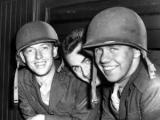
US marines and sailors dancing with Kiwi women at the Majestic Cabaret

The "American Invasion" (as New Zealanders affectionately called the arrival of US serviceman) brought a considerable clash of cultures, and the so-called "Battle" in Manners Street, one of the main streets here in Wellington City, was a messy explosion of tensions between two allies stationed together on the home front.
This riot, which has passed into Wellington legend as “the Battle of Manners Street”, took place on the evening of Saturday, 3 April 1943. 
About 20,000 American Marines arrived in Wellington shortly after the Japanese bombed Darwin in February 1942. They had set up their base at the Allied Services Club in Manners Street, where the Manners Street Post Office is now.


The riot began at the Allied Services' Club when, it is alleged, servicemen from the southern United States refused to let some Maori servicemen drink in the club. When the Americans removed their Army service belts to emphasise their point of view, New Zealand servicemen joined in and the “battle” spread into the streets. American military police, who arrived to restore order, took sides and used their batons. 
The fighting spread to the A.N.A. Club in Willis Street, where belts and knives were used, and into Cuba Street. It has been estimated that over 1,000 American and New Zealand, troops were involved, as well as several hundreds of civilians. The battle lasted for about four hours before order was restored. 
It was finally halted by the combination of the civil police, the military police, fatigue and the worrying threat for American serviceman of missing the last train back to their barracks near Paekakariki.Many American soldiers were injured during this affray and there were false rumours that two American serviceman had died that evening which persisted for decades.  The truth was that no one was killed, and only one New Zealand serviceman was subjected to military discipline.

US Marines


The “Battle of Manners Street” was the ugliest riot in New Zealand's history but it was not the only clash between American and New Zealand troops in New Zealand cities. About the same time there were two similar riots in Auckland, and a further clash occurred outside the Mayfair Cabaret, in Cuba Street, Wellington, on 12 May 1945. There was also a clash between a small party of American servicemen and Maori civilians at Otaki in October 1943.
In no case has the result of any of the ensuing inquiries been published and, owing to wartime censorship, no reference to the riots appeared at the time in local newspapers or on the radio.

Victory Tea - Party


What a great idea from Carolyn from the 1940's Experiment blog.
She is coming to the end of her one year challenge of living on wartime rations and recreating many of the recipes from back then with a vegan twist.

Check out her blog at http://1940sexperiment.wordpress.com .

Salem and I will be making come victory table treats to join in with the celebration.
We will keep you posted.


Thursday, September 13, 2012

WWII Aircraft of the Day - The Supermarine Spitfire


The Supermarine Spitfire

The Supermarine Spitfire - Britian
By Salem

The Supermarine Spitfire was probably the most famous aircraft ever built.
It's design was inspired by the Supermarine S.6B racing seaplane which won the Schneider Trophy for Britain in 1931.
The Supermarine Spitfire was designed by R.J. Mitchell.


Wednesday, September 12, 2012

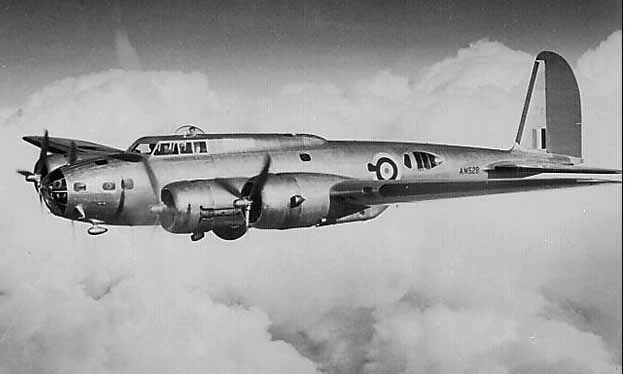
WWII Aircraft of the Day - The Boeing B-17


The Boeing B-17 Flying Fortress

The Boeing B-17 Flying Fortress - United States of America   
By Salem

The Boeing B-17 Flying Fortress was developed for the United States Army Air Corps in the 1930's.
It was part of the lease/lend scheme and was first loaned to the Royal Air Force in 1940.
The Flying Fortress was one of the predecessors of the bomber that dropped the atomic bombs on Hiroshima and Nagasaki.  
It was also used in the United States Army Air Corps' strategic bombers squadrons based in England.
It was a source of terror to the people of Germany.

Tuesday, September 11, 2012

New Zealand's Food Rationing in WWII


In 1944 The Economic Information Service for the Economic Stabilization Commission of New Zealand issued the "Housewives' Guide".  It contained information on food prices and food rationing.

The food rationing was slightly different here in New Zealand compared to Britian.
Food was rationed under the coupon system and the quantities available to each person is as follows......

Original NZ WW2 Ration Book Variant 3


BUTTER - 8 oz a week.  There was no ration for children under 6 months of age.

TEA - 2 oz a week, none for children under 10 years of age on the 1st January of the ration year.

SUGAR - 12 oz a week, with additional quantities in season for jam making, as announced from time to time.  No ration for children under 6 months of age.

Rationing Poster WWII - Food is a Weapon

EGGS - In districts where priority rationing is in force, a priority ration of 3 eggs a week for children 6 months and under 5 years, and 6 eggs a week for expectant and nursing mothers.  The allocation to general consumers varies according to the supply and is informally rationed through the grocers.

MEAT - The basic meat ration is 1/9 worth a week, with a half ration for children from 6 months to 5 years.
To compensate for seasonal and regional increases in meat prices, in terms of the price orders, the values of the adults' "H" and the children's "J" meat coupons alter throughout the year.

Milk, cooking oil and margarine was not rationed.  I also can't find any information saying that cheese was rationed.


Monday, September 10, 2012

WWII Aircraft of the Day - The Messerschmitt Me 163 Komet


Messerschmitt Me 163 Komet

The Messerschmitt Me 163 Komet - Germany
By Salem

The Messerschmitt Me 163 Komet was one of the most exciting war planes ever built.
It made it's first flight in 1941 but due to it's radical design, it didn't enter service until 1944.
The Komet was powered by a rocket engine and could climb up to 9140 metres in two and a half minutes.
But it did have an unquenchable thirst for fuel and it could only fly for ten minutes before it needed to be re-fueled.  
To reduce weight, the Messerschmitt Me 163 Komet had a detachable undercarriage, and to be able to land it had to skid on its belly.
But it's life was short lived as by the time they were introduced into service, the Nazi's were staring at defeat.


Sunday, September 9, 2012

WWII Aircraft of the Day - The Typhoon


Typhoons 

The Typhoon - Britian
By Salem

The Typhoon became the foremost ground attack force of the Royal Air Force.  It was modified to carry heavier and heavier weapon loads, starting with two 112kg bombs and later carrying two 450kg bombs.
During sweeps across the English Channel, before D-Day, Typhoons destroyed around 150 railway locomotives a month.  However in 1944, in an air battle over Falaise in France, in one attack they destroyed at least 137 tanks.


Friday, September 7, 2012

The Japanese Threat to New Zealand in WWII


Jigsaw puzzle
Jigsaw Puzzle  1944, J W Ltd, New Zealand

The Japanese Threat to New Zealand in WWII
During World War II, the New Zealand government used imagery such as rising-sun graphics to highlight the Japanese threat. Propaganda was part and parcel of wartime life.
Some commercial companies, like the one that produced this jigsaw box, did the same. The image of the Japanese soldier on the box is a sinister stereotype. Before the war, the lid of the same puzzle showed palm trees and an Asian boat.

New Zealand's Response to Pearl Harbor


Japan's bombing of Pearl Harbor in December 1941 and its capture of Singapore in February 1942 shocked New Zealanders. They worried about being attacked and about loved ones fighting overseas. The Japanese had bombed Darwin in Australia many times – would New Zealand be next?

The New Zealand Chiefs of Staff considered invasion unlikely because of the country's isolation. Hit-and-run raids were more probable.
The fear of the Japanese affected communities in different ways. People practised air raid drills, and some schools built shelters and trenches. The general school policy, however, was more relaxed – pupils were to go home if an alarm sounded.
The arrival of American forces in June 1942 injected welcome relief and excitement into the country. 
The above information is from http://www.tepapa.govt.nz


WWII Aircraft of the Day - The Henschel HS 123


The Henschel HS 123


The Henschel HS 123 - Germany
By Salem

The Henschel HS 123 was a small German war plane.  It was virtually un-used between 1939 - 1940.
It was then taken out of service in 1940, but soon the Germans began to wish that they had kept the old  Henschel HS 123 in production rather than withdrawing it from front-line service.
It was finally re-called for the fight against the Russians. Then when one Luftwaffe commander insisted in no uncertain terms that production should be re-started immediately, it was discovered that all the tools and construction jigs had been destroyed.  The Germans then had no alternative but to press back into service the remaining Henschel HS 123 planes.