Showing posts with label the Home Front. Show all posts

Monday, December 10, 2012

Ration Hint of the Day - Number Thirty-eight


Ration Hint No. 38
You can use the same cup or bowl when measuring if you measure dry ingredients first then fats or liquids.....
saves that washing up!


Thursday, December 6, 2012

Ration Hint of the Day - Number Thirty-seven


Ration Hint No. 37

Bedtime Story

Once upon a time there were five housewives.
Their names were Lady Peel-potatoes, the Hon. Mrs Waste-fuel, Miss Pour-the-water-down-the-sink, Mrs Don't-like-uncooked-vegetables, Mrs Won't-eat-carrots.
Don't let one of them put a nose in your kitchen.


Monday, December 3, 2012

Chemically Speaking Part IV


The following is from an article which appeared in The Red+Cross War-time Rationing Cookery Book  which was printed around 1944.

This is part four and also the last part of this article..  
It gives a good outline of chemicals which the body needs for health and how to get them.  
As meat was heavily rationed, it gives mainly vegetable sources as a way to get these nutrients especially for iron.


16 Elements for Health and Beauty Part III


Iodine

This is the gland regulator; wrinkles and drawn faces suggest a deficiency of iodine.
And the enlarged thyroid gland in the neck is sometimes treated with drops of iodine in water ordered by a doctor.
Iodine foods are onions, shrimps, salmon, egg yolks, spinach and pears.


Fluorine

This is the youth preserver, the protector against infectious diseases.
It helps to protect the enamel in teeth, and is a strong antiseptic.
It is found in egg, cod liver oil, watercress, veal bone broth and oatmeal.

For those who are curious about why fluorine(fluoride) may have been included, check out some more information at:  http://www.best-home-remedies.com/minerals/fluoride.htm


Silicon

Lack of silicon is said to produce baldness and bad nails.
It should be included in your diet by having spinach, carrots, wheat and barley and almonds.


Manganese

Manganese is said to be deficient in the stutterer.
Tomato juice is a good way of taking this, for it also has potassium and iron.
Canned tomato juice is as good as fresh, provided, of course, it is taken out of the can as soon as it is opened.


By a good, mixed diet of fresh and dried fruits, with some milk for breakfast, a large raw salad for lunch; and then steamed vegetables, with some form of protein in the way of meat, fish, eggs or cheese, you will be providing yourself with all these elements without much difficulty.
Water should be taken freely between meals, but not with food.


Ration Hint of the Day - Thirty-five


Ration Hint No. 35

Scrambled eggs can vary!

With that spoonful of cooked green peas.....
or sweet corn off the cob......
or tomato, or chopped cooked carrots.....
or grated cheese or ham......
all make a meal when served on crisp sauted or toasted bread and perhaps topped with a rasher or thin, very thin and curly bacon!


Chemically Speaking Part III


The following is from an article which appeared in The Red+Cross War-time Rationing Cookery Book  which was printed around 1944.

This is part three and I will be posting the last part tomorrow.  
It gives a good outline of chemicals which the body needs for health and how to get them.
As meat was heavily rationed, it gives mainly vegetable sources as a way to get these nutrients especially for iron.


16 Elements for Health and Beauty Part III


Chlorine

Chlorine helps the system to get rid of poisons.
It is found again in spinach, lettuce, egg yolk, cucumber, and a piece of the latter should be taken at the beginning of breakfast, for it's valuable cleansing, eliminative properties.


Calcium

This is the element which helps the teeth and bones, and promotes good circulation.
It is found in milk, lemons, oranges, tomatoes, raw egg yolk, turnips and turnip tops.


Potassium

Prevents constipation and is found in vegetables, such as spinach, carrots, lettuce, parsley and also blackberries.


Sodium

Sodium is alkaline; it works with potassium, and helps the digestion.
It is found in celery, cabbage, spinach and lentils.


Magnesium

This element brings refreshing sleep.
Anyone who is tired cannot look and feel the picture of health.
People who are tense and "live on their nerves" need magnesium, and they can take it in whole wheat (there are many tonics and medicines containing the wheat germ; ask your doctor).
Lemons, grapefruit, spinach, potatoes and other vegetables also contain natural magnesium.


Iron

Iron is important.
It guards one against anaemia, and acts as a tonic.
The iron foods are all green leaves, especially spinach, watercress, lettuce, also carrots, raisins and egg yolk, herring roe and liver, and grapes.

Part IV, the last one, will be posted tomorrow.


Sunday, December 2, 2012

Ration Hint of the Day - Number Thirty-four


Ration Hint No. 34

Roll balls of peanut butter in crushed chocolate-coated or wholemeal biscuits.
Wrap in waxed paper to serve.


Saturday, December 1, 2012

Chemically Speaking Part II


The following is from an article which appeared in The Red+Cross War-time Rationing Cookery Book  which was printed around 1944.


This is part two and I will be posting the other parts over the next few days.  
It gives a good outline of chemicals which the body needs for health and how to get them.
As meat was heavily rationed, it gives mainly vegetable sources as a way to get these nutrients especially for iron.


16 Elements for Health and Beauty Part II


Hydrogen

This element is an equalizer, and cools one down.
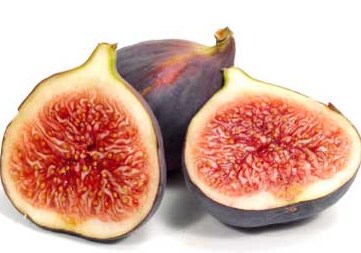
It stimulates perspiration and elimination, and the foods which contain it are lemons, peaches, figs, melons, oranges, grapefruit, spinach and turnip greens.
They help to maintain a pure blood stream, free from heating rashes and spots.

Some people may be a bit bemused by the use of hydrogen in this article.
There is not much "modern information" on hydrogen as such, but check out: http://www.best-home-remedies.com/minerals/hydrogen.htm .


Nitrogen

This is said to be concerned with poise and stamina, and people who lack it are inclined to be pessimistic, because they never feel well and, therefore, look on the dark side of life.
Nitrogen foods are almonds, yolk of egg, beef, lamb and fish, in fact, all proteins, such as dried peas, beans and lentils.


Phosphorus

This improves the nerves, and is, therefore, rich in vitamin B, and found in whole grain cereals, spinach, lettuce, cauliflower and lemons.


Sulphur

This element is a beautifier, and improves the skin, helps to keep the hair glossy, and enables the liver to work on the sixteen elements, so that the body can make the right use of them.
It helps to overcome rheumatism and skin and blood troubles.
Some of the foods which contain sulphur are spinach, turnips, onions, tomatoes, raw celery, lettuce and cauliflower.


Chemically Speaking - Part I


The following is from an article which appeared in The Red+Cross War-time Rationing Cookery Book
which was printed around 1944.

I will be posting it in parts over the next few days.  There is a lot to type out.
It gives a good outline of chemicals which the body needs for health and how to get them.
As meat was heavily rationed, it gives mainly vegetable sources as a way to get these nutrients especially for iron.


16 Elements for Health and Beauty Part I


Today more than ever it is incumbent on each one of us to endeavour to maintain as high a standard of health as possible.  One feels that it is almost criminal to ask a hard worked doctor to attend any call less urgent than a broken limb or a birth!

The maintenance of health entails a brood general knowledge of what we are - and what we need!

Eccentricities .... extremes in diet .... over exposure to sun and air .... fadism of any kind is best avoided.  Rationing restrictions must be taken into account.

Know what you are chemically.  Know what you need, in food and it's vitamin content, in air, sun and exercise to maintain the necessary chemical constituents in the body.  Be sensible ... and you should be healthy!

Here is a brief outline of the 16 chemicals necessary in every healthy human body :-


Oxygen
This, of course, comes from the fresh air we breathe, and depends very largely on outdoor exercise, walking or games or gardening, according to your bent, and one or other should have it's place in your daily programme.

Take some really conscious deep breaths several times a day, and start and end your day with them, breathing in through the nose and out through the mouth, and so really fill and oxygenate your lungs.
This not only makes for good health, but it is a real natural vitaliser, bringing that coveted sense of well-being (just think of yoga today).

Oxygen may also be taken with food, by including a reasonable amount of fruits and vegetables - grape juice, apples and water.


Carbon
Carbon foods should be eaten sparingly, as an excess of these destroys mental alertness, and will increase weight.

Try to have the best carbon foods in wheat bread, whole rice, baked potato, brown sugar, honey, rye bread and figs.

Pale, flabby faces and bodies denote an excess of carbon, so these people should cut down over-refined foods and increase the intake of vitamins in fruit and vegetables.

Part II will be posted tomorrow.


Tuesday, November 27, 2012

Meet the Girls


Our lovely ladies of the backyard

We have had a few days rest from doing any posting which has been quite nice as we are very busy at the moment.  Salem is doing a lot of extra dance practice as he has his ballet exams this coming weekend, so we have been making extra trips up to the gym so he can use the dance studio there.
We have also been interviewed for a Christmasy article that is to appear in "That's Life" magazine.

With Ted the bantam and two little eggs

We are about to start making some xmas goodies - xmas cake, presents for our family and xmas decorations - as soon as the exams are done and dusted.
Otherwise life is as usual, making and eating yummy wartime meals, tending to household chores and enjoying our pets, especially our very silly and very cute bantam hens.


Zebby about to hide in the comfrey

So I thought I would introduce your to our beautiful girls
Zebby, Tiger, Ted and Blackie.
Our four lovely ladies have done us proud with eggs this year, laying right through winter with at least one egg a day, now it's up to two or three a day.

Tiger and Blackie play follow the leader

Over the last few weeks, they have been taking turns in going broody, our three little black ones have all had their turns, and now it is Zebby's turn.  She's the black and grey one.

Let's find Zebby

We all love their tasty little eggs.  Small and packed with flavour.
I find that they are perfectly fine in all my cooking and I don't add more eggs to my recipes to make up for the small size of the eggs.


Wednesday, November 21, 2012

The Trifles - A Poem


I came across this poem which I would like to share with you.

The Trifles

We drove - we never liked to walk,
The shortest distance was too far.
A wheel felt pleasant in our hands,
We simply loved to drive a car.
And so we found it hard at first,
To wait at corners for a bus,
But after doing it for months,
We know it has been good for us.

We drank our coffee good and strong;
We always liked two cups, or three,
And often, in the afternoon,
We had an extra cup of tea.
And so we found it hard, at first,
But now we'd almost blush with shame
To think that anyone we knew
Would hesitate to play the game.

We liked our bacon brown and crisp,
With lots of butter on our toast.
Without a thought we order up
A juicy steak, a five-pound roast.
We'll find it rather hard, at first,
When rationing begins in May,
But there are lots of substitutes
To cook upon a meatless day.

The things we do are trifling things,
We still have plenty, safety, ease.
We still can say the things we think;
We still can worship as we please.
Ours is the smooth and easy path,
While, for our safety, others fight -
The little burdens that we bear,
Beside a knapsack, are so light!

Dorothy Dumbrille, in the 'Montreal Star'


Thursday, September 27, 2012

Ration Hint of the Day - Number 1


I have been lucky enough to come across this copy of Self Help Wartime Cooking Suggestions - How to get the most out of your rations.  
I think it is a New Zealand publication, but am not 100% sure on that.
I just love finding these old publications, I look in the op-shops, fairs and on on-line auction sites.

This has a lot of great recipes and hints which I will share with you over time.  Salem and I will also cook many of the recipes and share our results with you.

Every day I will also post up a Ration Hint of the Day with this being the first one .......

Ration Hint No. 1

To clarify fat for cooking:-

a)  Put into a saucepan with plenty of water.  
     Bring to the boil, then stand in a cool place till set.
     Lift out the set fat, scrape any sediment from the underside.
     All gravy and sediment will remain in saucepan.

b)  Melt fat and add a potato cut into quarters.
     When the potato is browned, and the fat stops bubbling,
     strain the fat through a double cheese cloth and
     store in a cool, dry place.


Monday, August 6, 2012

New Zealand's International Relations in WWII


Salem and I visited our National Museum, Te Papa, on the weekend.  We love going there to see our favourite exhibits.  The exhibits of New Zealand's 20th Century History are great.
They have an exhibit about New Zealand's role in WWII and how it affected New Zealanders  and our relationships with Britian and with the United States.
The following is information from Te Papa.

In 1900, New Zealand’s strongest ties were with Britain. The colony supported the ‘mother country’ through two world wars.

The United States became an ally when it offered protection from Japan in World War II. The 1951 Anzus defence treaty sealed this new relationship.

But the Vietnam War and New Zealand’s 1980s anti-nuclear stance strained ties with ‘Uncle Sam’ (the US). New Zealand increasingly turned its armed forces towards international peacekeeping and regional security.
World War II marked a new friendship with the US. New Zealand stood faithfully at Britain’s side throughout the war – but the Americans were the ones to defend the Pacific after Japan attacked Pearl Harbor in 1941. Find out about these war years and their effect on New Zealanders’ lives, including on the home front.


‘THE UNITED STATES SERVICEMAN IS A FINE CHAP, A GENUINE FRIEND, AND ABOVE ALL AN INTENSELY LOYAL SOLDIER.’
EDITORIAL, THE EVENING POST, SEPTEMBER 1942
World War II was sparked when Germany invaded Poland on 1 September 1939. Two days later, Britain declared war on Germany, followed promptly by its faithful dominion New Zealand. Life here was about to change dramatically.

Emergency regulations & conscription 

New Zealand’s Emergency Regulations Act 1939 was passed shortly after the declaration of war. The act gave the government wide powers. In May 1940, an amendment placed people and property in the hands of the government, enabling the introduction of conscription (compulsory military service). From March 1941, New Zealanders had to dim lights in buildings, streets, and vehicles. The severest restrictions were in coastal towns, which were considered most vulnerable to enemy attack. People used heavy curtains, paper, wood, or paint to black out their windows.


Peter fraser

Peter Fraser
Peter Fraser (1884–1950) was New Zealand’s Prime Minister for most of World War II. He skilfully used radio broadcasts and newspapers to build support for the war effort. The government also promoted the war through posters aimed at different sectors of the community.

Fraser was the leader to introduce conscription (compulsory military service), which, ironically, he’d been imprisoned for opposing during World War I.
Japan enters the war – US enters New Zealand

In December 1941, Japan attacked American forces at Pearl Harbor in Hawai‘i. The war was suddenly on New Zealand’s doorstep, but the country’s soldiers were fighting in North Africa.

Britain had its hands full in Europe, so US troops were sent to New Zealand to operate in the South Pacific. Their arrival brought jazz and pizzazz to wartime New Zealand. The country had a new ‘buddy in arms’.


Contributing on the home front

Practically all New Zealanders contributed to the war effort, including those not in the armed forces. Older men were active in the Home Guard. Many people volunteered for organisations supporting the war, including the Women’s Land Service. Others were made to work in essential industries (‘manpowering’). Still others maintained households and families, knitted and baked for soldiers overseas, and lent savings.

Between 1942 and 1944, half New Zealand’s national income went to fund the war.


To find out more check out http://www.tepapa.govt.nz/WhatsOn/exhibitions/SliceofHeaven/Exhibition/InternationalRelations/Pages/WorldWarII.aspx

Tuesday, June 12, 2012

Some useful websites


Just a quick post today for those who are wanting information on getting started on their own journey into wartime life.
There are quite a lot of useful websites out there to get information about  rationing and life during WWII.
Also plenty of very cool recipes to try.

Check out:

 www.ukhomefront.co.uk

http://www.southshorenow.ca/timetoremember/recipes/index.php

http://1940sexperiment.wordpress.com/100-wartime-recipes

http://woottonbridgeiow.org.uk/recipes/wartime.php

http://www.bbc.co.uk/schools/primaryhistory/world_war2/daily_life/

http://cookit.e2bn.org/historycookbook/20-97-world-war-2-Food-facts.html

These will get you started.  The sites aimed at children are pretty interesting.